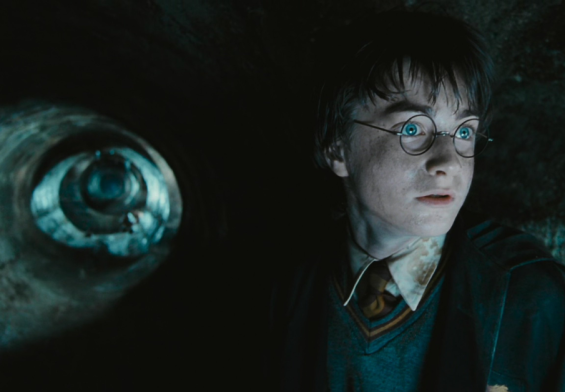
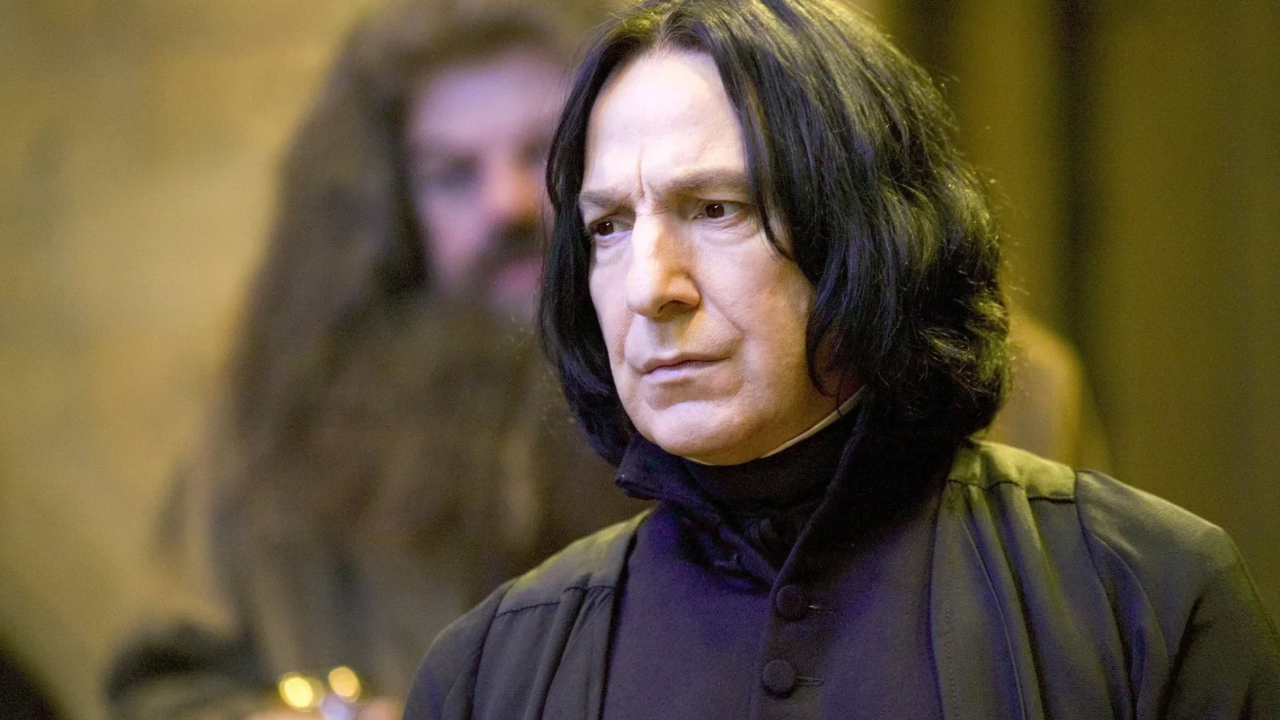
For someone as paranoid, intelligent, and ruthlessly suspicious as Lord Voldemort, trusting Severus Snape seems like an extraordinary mistake.
After Voldemort’s first defeat, Snape spent years teaching at Hogwarts, working closely with Albus Dumbledore, and eventually becoming one of his most trusted confidants. Yet when Voldemort returned, Snape managed to walk back into the Death Eaters’ ranks and convince the Dark Lord that he was still on his side.
And this wasn’t just a matter of telling a convincing lie. Voldemort was one of the most accomplished Legilimens alive, capable of penetrating minds and uncovering hidden thoughts, memories, and emotions.
So, how did Snape fool Voldemort for so many years? Why didn’t Voldemort simply look inside his mind and discover that his most valuable spy was actually working for Dumbledore?
The answer involves exceptional Occlumency, a carefully maintained cover story, genuine intelligence, and a weakness Voldemort never truly overcame: his inability to understand love.
But none of those explanations works quite as well on its own. To understand Snape’s greatest accomplishment, we need to look at how they worked together.
Recommended for You:- Why Didn’t Dumbledore Destroy All of Voldemort’s Horcruxes Himself?
- Why the Golden Snitch Was Designed to Hold Secrets
Voldemort’s Arrogance Made Deception Seem Impossible
The first and perhaps easiest explanation is Voldemort’s arrogance.
He had an almost pathological confidence in his own superiority. He believed himself more powerful, more intelligent, and ultimately more important than everyone around him. That belief shaped virtually every major decision he made.
He underestimated the possibility that someone would discover the secrets of his Horcruxes. He trusted the concealment of the Room of Requirement because he believed he understood Hogwarts more deeply than others. And he repeatedly dismissed forms of magic and human motivation that did not fit his worldview.
Love, loyalty, sacrifice: these were things other people depended on. Voldemort believed he had moved beyond them.
His relationship with the Death Eaters followed the same pattern. He did not need affection or genuine devotion when fear could keep people obedient.
From that perspective, betrayal should have been almost unthinkable. Who would knowingly deceive Lord Voldemort when the consequences included torture and death?
Why Didn’t Voldemort Require an Unbreakable Vow?
The absence of a routine Unbreakable Vow of loyalty raises an interesting question. Why rely on intimidation when magic might impose a more direct consequence for betrayal?
The story does not explicitly explain Voldemort’s reasoning, so this remains an interpretation rather than a confirmed answer. But his arrogance offers a plausible explanation: he may have considered fear of him sufficient.
In his mind, what greater deterrent could there be?
Of course, Voldemort knew that followers could be cowardly or disloyal. Many had abandoned him after his first defeat. But abandoning a seemingly defeated master was one thing. What Snape was doing was something else entirely.
Snape voluntarily returned when Voldemort regained power. He stood only feet away from him, attended Death Eater meetings, delivered intelligence, and risked exposure every time he entered the room.
The idea that someone would accept that danger out of loyalty to a dead woman was much harder for Voldemort to comprehend.
Still, arrogance alone does not explain Snape’s success. Voldemort’s confidence mattered, but Snape also needed the skill to survive scrutiny.
Did Voldemort Ever Try to Read Snape’s Mind?
One important distinction often gets lost in this discussion: we have no reason to assume Voldemort never tried to examine Snape’s mind.
The question is sometimes framed as though Voldemort simply forgot Legilimency existed. But that would be a strange oversight for someone so suspicious, particularly given Snape’s history.
After Voldemort returned in Goblet of Fire, Snape had an enormous amount of explaining to do.
- He had remained at Hogwarts, closely associated with Dumbledore throughout Voldemort’s absence.
- He had interfered with Quirrell, helping prevent him from obtaining the Philosopher’s Stone, also called the Sorcerer’s Stone.
- He had repeatedly helped keep Harry alive, despite Harry being Voldemort’s greatest enemy.
- He had not returned immediately when Voldemort summoned the Death Eaters after his resurrection.
Those are not minor concerns. From Voldemort’s perspective, each one deserved an explanation.
The books do not give us a complete account of every private meeting between them. But they do make it clear that Snape’s loyalty had been questioned and that he had supplied answers Voldemort accepted.
That distinction matters. Snape’s achievement was not necessarily avoiding examination. It was surviving examination without exposing the truth.
Snape’s Answers to Bellatrix Reveal How His Cover Worked
One of the clearest demonstrations comes in Half-Blood Prince, when Bellatrix Lestrange confronts Snape at Spinner’s End.
She asks almost every question a suspicious reader might ask.
Where was he when Voldemort fell? Why did he never search for him? Why had he spent years in Dumbledore’s pocket? Why had he obstructed the attempt to obtain the Stone? Why had he returned late? Why had he missed the battle at the Ministry? And why was Harry Potter still alive after spending five years within his reach?
Snape’s response is devastatingly simple: does she really think Voldemort has not already asked those questions?
If his answers had been unsatisfactory, he points out, he would hardly be sitting there having a drink with her.
He then turns Bellatrix’s suspicion into an uncomfortable challenge to Voldemort’s judgment. Is she suggesting that Snape has somehow fooled the master she considers the greatest and most accomplished wizard alive?
For someone whose devotion depends on Voldemort’s superiority, that is a difficult position to defend.
And honestly, Snape destroys Bellatrix here. Not because her suspicions are wrong, but because he understands exactly how to make those suspicions sound unacceptable.
Why Snape Stayed at Hogwarts
Snape reminds Bellatrix that Voldemort originally wanted him at Hogwarts to spy on Dumbledore.
His presence there was not, by itself, proof of betrayal. It was the continuation of an assignment Voldemort had given him.
After Voldemort vanished, Snape’s explanation was that he believed him finished. He had chosen survival rather than searching for a master he thought would never return.
That admission was carefully calculated. Many other Death Eaters had done the same thing. If Voldemort refused to forgive everyone who had lost faith, he would have very few followers left.
Bellatrix, naturally, insists that she remained loyal and endured Azkaban for him.
Snape’s answer cuts straight through her pride: her imprisonment may have demonstrated devotion, but it had not made her particularly useful. He, meanwhile, had remained close to Dumbledore and accumulated years of valuable information.
Why His Other Suspicious Actions Had Plausible Explanations
Snape’s broader defense depends on preserving his usefulness as a spy.
Returning too eagerly could have exposed him to Dumbledore. Acting openly against Harry could have destroyed his position at Hogwarts. He explained his opposition to Quirrell by claiming that he had not known Voldemort was involved and had seen only an unworthy man trying to steal the Stone.
Likewise, remaining outside the Ministry battle helped preserve the appearance that he was still Dumbledore’s trusted colleague.
Whether every detail was true was not the point. The point was that his account was coherent.
Snape did not behave like someone improvising an excuse for the first time. His answers were polished, anticipated the obvious objections, and presented apparently disloyal actions as necessary parts of a long-term assignment.
He made betrayal look like competent espionage.
Snape’s Occlumency Was His Most Important Defense
A convincing cover story would not have been enough if Voldemort could instantly uncover every contradictory memory.
That brings us to Occlumency, the magical defense of the mind against external intrusion.
Snape was exceptionally skilled at it. In Order of the Phoenix, Dumbledore selects him to teach Harry how to resist Voldemort’s mental access.
That choice demonstrates Dumbledore’s confidence in Snape’s ability. It does not conclusively establish that Snape was better at Occlumency than Dumbledore himself, especially because Dumbledore also had reasons to avoid close contact with Harry at the time. But it does place Snape among the people Dumbledore trusted with an extraordinarily important task.
And Snape’s explanation of Legilimency gives us the foundation for understanding how he deceived Voldemort.
Legilimency Is Not an Automatic Truth Detector
As Snape explains to Harry, the mind is not a book that someone can open and inspect at leisure.
Legilimency allows a skilled practitioner, under certain conditions, to enter another person’s mind and interpret what they find. That is not the same as receiving an objective, perfectly organized transcript of everything the person knows.
The distinction is crucial.
Voldemort is extremely good at detecting lies. But Snape explains that a skilled Occlumens can suppress feelings and memories that contradict a falsehood, allowing that person to lie without detection.
In other words, the books give us a direct answer to the central objection. Voldemort’s Legilimency was powerful, but it was not unbeatable.
Snape possessed precisely the defensive skill needed to counter it.
Did Snape Let Voldemort See Only Certain Thoughts?
Here we move from explicit explanation into interpretation.
It seems reasonable that an obvious, impenetrable mental barrier might itself have attracted suspicion. If Voldemort encountered nothing but resistance every time he examined his most important spy, he might wonder what that spy was hiding.
So perhaps Snape’s real mastery involved something subtler:
- Suppressing dangerous memories connected to his true allegiance.
- Controlling emotional responses that might expose guilt, fear, or attachment.
- Maintaining believable surface thoughts consistent with his cover story.
- Separating his actual mission from the information he could safely reveal.
The exact mechanics of Snape’s mental defenses are not fully shown. We should not pretend the books provide a step-by-step explanation of selective access.
But the broader principle is clear: Snape could prevent the thoughts that disproved his lies from betraying him.
Snape’s Lies Were Wrapped in Genuine Feelings
Snape also had a remarkable advantage: much of the personality Voldemort saw was real.
He did not need to invent bitterness, resentment, or a fascination with the Dark Arts. Those were already part of him.
Snape genuinely hated James Potter. He resented Harry, who constantly reminded him of James. He had willingly joined the Death Eaters. And he could be cruel, contemptuous, and deeply unpleasant toward people who were nevertheless on his side.
That made his disguise far more convincing than a completely fabricated identity.
If Voldemort searched for resentment toward Harry, he could find it. If he expected memories of humiliation at Hogwarts, those existed. If he looked for an attraction to dark magic, Snape had a genuine history of it.
Protecting Harry did not mean liking Harry.
That uncomfortable distinction was central to Snape’s success. Voldemort could correctly recognize Snape’s hostility and still draw the wrong conclusion about his loyalty.
The most dangerous secret was not that all of Snape’s apparent feelings were false. It was that another motivation outweighed them: his enduring attachment to Lily Potter and his commitment to the work he had undertaken after betraying her.
Voldemort Understood Snape’s Desire for Lily, but Not His Love
Voldemort knew that Snape had wanted Lily spared.
The attachment itself was not entirely hidden from him. What he failed to understand was its significance.
Voldemort could comprehend wanting someone. He could understand possession, appetite, and personal gratification. But he treated Snape’s feelings as something that could fade or be replaced.
What he could not properly grasp was that Lily’s death might permanently alter Snape’s loyalties.
To Voldemort, she was gone. She could no longer reward Snape, protect him, or offer him anything.
Why would he spend the rest of his life risking death for her?
The answer is the very thing Voldemort consistently underestimated: love can motivate people even when there is nothing left for them to gain.
What Snape’s Doe Patronus Reveals
The scene in which Snape produces his silver doe Patronus makes the depth of that attachment unmistakable.
Dumbledore asks, “After all this time?”
Snape answers, “Always.”
It is a brief exchange, but it reveals a motivation that Voldemort’s understanding of people cannot adequately explain.
Snape’s allegiance was rooted in love, guilt, grief, and a desire to atone for the role he had played in Lily’s death. His relationship with Dumbledore became more complicated over time, but Lily remained central to the choice that brought him there.
Voldemort might possess the magical ability to uncover hidden thoughts. Yet his interpretation of human motives remained deeply limited.
Occlumency kept the secret protected. Voldemort’s misunderstanding of love helped make the false explanation believable.
The Same Weakness Appears Elsewhere
This was not an isolated mistake.
Voldemort repeatedly failed to anticipate what people would do because they loved someone.
- Lily sacrificed herself for Harry, creating protection Voldemort had failed to account for.
- Narcissa lied about Harry’s death, placing the possibility of reaching Draco above loyalty to Voldemort.
- Harry walked willingly toward death, seeking to protect others rather than preserve himself at any cost.
These choices were not driven by the pursuit of power. That made them difficult for Voldemort to predict.
Snape’s deception exploited the same blind spot.
Snape’s Cover Story Made More Sense to Voldemort Than the Truth
Another reason the deception worked is that Snape offered Voldemort a version of events that matched his worldview.
In that version, Snape was an opportunist.
When Voldemort disappeared, Snape assumed he was defeated and protected himself. He persuaded Dumbledore that he had changed sides, avoided Azkaban, and secured a comfortable position at Hogwarts.
When Voldemort returned, those years suddenly became an asset. Snape had access to Dumbledore’s inner circle and could now deliver intelligence that other Death Eaters could not obtain.
Self-preservation, usefulness, proximity to power: Voldemort understood all of that.
The truth was far less compatible with his assumptions.
Snape Changed Sides Before Lily Died
An essential detail is that Snape approached Dumbledore before the Potters were murdered.
After realizing that the prophecy he had passed to Voldemort put Lily in danger, he begged Dumbledore to protect her. His betrayal of Voldemort had already begun.
After Lily’s death, that decision became a continuing commitment to help protect Harry.
So it is not quite enough to say that Snape changed sides because Voldemort killed Lily. The threat to her life first drove him to Dumbledore; her death deepened the guilt and obligation that kept him there.
From Voldemort’s perspective, the opportunistic explanation was easier to accept than the real one.
He could understand a man changing sides to survive. He could not understand a man spending years in mortal danger for someone who would never know what he had done.
Snape Gave Voldemort Genuine Intelligence
Even the best cover story eventually collapses if a spy’s information is consistently wrong.
Snape needed to be useful, not merely convincing.
That meant giving Voldemort accurate intelligence, even when doing so carried real risks for the people Snape was secretly helping.
Dumbledore understood this. Protecting Snape’s position sometimes required more than reassuring words or fabricated reports. Voldemort needed evidence that his access to Dumbledore’s circle was producing results.
Each accurate disclosure reinforced the same conclusion: Snape was a valuable asset.
The Battle of the Seven Potters
The clearest example comes before the Battle of the Seven Potters.
Following instructions from Dumbledore’s portrait, Snape gives Voldemort the correct date on which Harry will leave Privet Drive.
The reasoning is explicit: withholding the correct date would arouse suspicion because Voldemort believed Snape to be so well informed.
At the same time, Snape is instructed to plant the idea of using decoys, helping create a plan intended to protect Harry.
This is the double-agent problem in its harshest form. Snape must supply a dangerous truth while also trying to reduce the harm that truth could cause.
The strategy does not make the operation safe. But it shows that maintaining his cover required genuine, consequential intelligence.
Voldemort trusted Snape partly because Snape repeatedly gave him reasons to do so.
Killing Dumbledore Seemed Like Ultimate Proof of Loyalty
If Voldemort had any lingering doubts, Snape killing Dumbledore must have seemed like overwhelming confirmation.
From Voldemort’s perspective, this was not merely a useful report or an explanation that sounded plausible.
Snape had killed the leader of the resistance. He had eliminated the only wizard Voldemort had ever truly feared. And he had done it in front of witnesses before fleeing Hogwarts with the Death Eaters.
How could someone still be Dumbledore’s man after that?
The answer, of course, was that Dumbledore had arranged it.
What Voldemort Did Not Know About Dumbledore’s Death
Snape’s actions on the Astronomy Tower fulfilled a private agreement with Dumbledore.
That agreement served several purposes:
- Protecting Draco from committing murder, rather than allowing Voldemort’s assignment to define the rest of his life.
- Sparing Dumbledore a potentially worse death, with the curse from the ring already limiting his remaining time.
- Preserving Snape’s position with Voldemort, allowing him to continue the work that would outlive Dumbledore.
Voldemort did not know about that arrangement.
What he saw was exactly what he was meant to see: Severus Snape choosing him over Dumbledore.
It was an extraordinarily effective deception because the act itself was real. Dumbledore truly died. The hidden truth concerned why Snape killed him, not whether it happened.
Why Fear Could Not Guarantee Snape’s Loyalty
Voldemort built a system in which terror was supposed to prevent betrayal.
His followers knew the consequences of failure. They had seen his punishments, his rage, and his willingness to kill.
But fear only works as an absolute restraint if someone values their own safety above everything else.
Snape had something he considered worth the risk.
That does not mean he was fearless. It means the danger was not enough to make him abandon his purpose.
Voldemort could imagine Snape serving Dumbledore for protection. He could imagine him returning to the Death Eaters because power had shifted. He could imagine ambition, convenience, and self-interest.
What he could not adequately imagine was a commitment that survived humiliation, danger, personal dislike, and the death of the person who inspired it.
Snape did not need to be free of fear to deceive Voldemort. He needed a reason to act despite it.
Did Voldemort Trust Snape Until the End?
In terms of Snape’s allegiance, Voldemort remained deceived until after Snape’s death.
His decision to kill Snape was not the discovery of a double agent. It came from his mistaken understanding of the Elder Wand’s allegiance.
Voldemort believed that killing Snape was necessary to become the wand’s true master because Snape had killed Dumbledore.
That makes the ending particularly brutal. Snape’s apparent loyalty did not save him, because loyalty never meant Voldemort would place another person’s life above his own pursuit of power.
Voldemort could trust someone as a servant and still regard that servant as disposable.
Snape’s cover held. Voldemort killed him for an entirely different reason.
Snape’s Greatest Accomplishment Was Making Voldemort Believe He Understood Him
Ultimately, Snape fooled Voldemort through a combination of skill, credibility, and psychological insight.
His Occlumency protected the memories and feelings that could expose him. His cover story explained years of suspicious behavior. His genuine resentment and dark history made the role believable. His accurate intelligence proved his usefulness. And killing Dumbledore appeared to settle the question of his allegiance.
But beneath all of that sat Voldemort’s greatest weakness.
He believed he understood Snape.
He saw bitterness and assumed loyalty to darkness. He saw ambition and assumed self-interest. He knew about Lily and assumed her importance would pass.
He was wrong.
Snape had made a choice years earlier, and the forces sustaining that choice were the very ones Voldemort dismissed: grief, guilt, sacrifice, and love.
That does not mean love magically defeated Legilimency. Snape’s skill kept Voldemort out; Voldemort’s blind spots kept him convinced.
And that is what makes this deception so remarkable. Snape did not simply hide a secret from the Dark Lord. He persuaded him to believe a version of Severus Snape that was almost entirely true, except for the one thing that mattered most.
If you enjoyed this exploration of Snape’s greatest deception, share the article with a fellow Harry Potter fan and follow for more discussions of the wizarding world’s mysteries.
Until next time, remember: “It does not do to dwell on dreams and forget to live.”